

In this article, MyOva founder Leila Martyn shares her personal experience with Polycystic Ovarian Syndrome (PCOS) and how discovering Myo-inositol became a breakthrough in her own hormone journey. She also explains what inositol is, how it works, and why it can be such an effective supplement for women managing PCOS.
My Story: How I Discovered Myo-inositol
If you’re dealing with unpredictable cycles, mood swings, or stubborn skin and weight changes, all while trying to make sense of the endless (and often conflicting) advice online – I know that feeling all too well.
My own hormone journey began in my late teens when I was diagnosed with PCOS after years of irregular periods. I still remember my GP telling me, quite bluntly, that I might struggle to have children. Years later, when I started trying for a family, that fear became reality. I experienced six miscarriages over five years and felt utterly powerless.
But I’ve always believed that knowledge is power. So, I started researching recurrent miscarriage and came across multiple studies on Myo-inositol. When I began taking it, I noticed real changes, my mood lifted, my energy stabilised, and my cycles became more regular. Not long after, I conceived my two beautiful boys, Louie and Luca.
Undoubtedly, that experience changed everything for me. It’s what inspired me to create MyOva, a supplement and functional tea brand to help women with PCOS feel informed, supported, and empowered. Specifically, I wanted to turn what was once my biggest challenge into something that could genuinely help others.
Over the years, I’ve seen first-hand how powerful Myo-inositol can be for women managing PCOS. It’s also something the team at FUTURE WOMAN often recommend for clients dealing with insulin-resistant PCOS or irregular cycles.
So, let’s take a closer look at why this gentle compound can make such a difference, and how it might help you too.
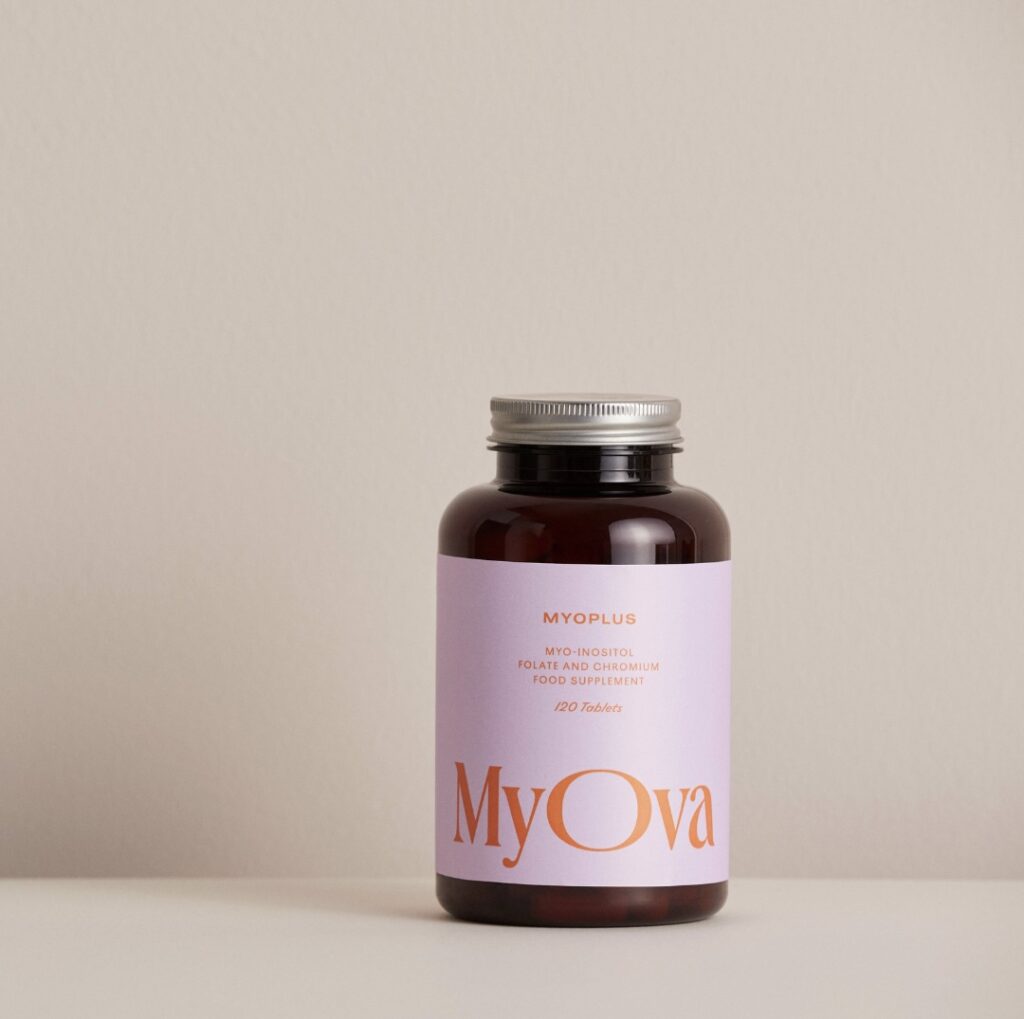
What Is Myo-inositol?
Inositol is a naturally occurring vitamin-like compound found in fruits, grains, and in the body itself. It acts as a messenger between hormones and cells, helping to ensure they communicate properly.
There are nine different forms of inositol including; Myo-inositol (MI), which supports insulin sensitivity and ovarian function.
What the Research Shows about Myo-inositol for PCOS
Research into Myo-inositol has grown quickly over the past decade, and the findings are consistently positive. Studies show that inositol can:
● Improve insulin sensitivity as effectively as Metformin without the side effects
● Support regular ovulation and restore menstrual cycles
● Enhance egg quality and improve outcomes in IVF
● Lower androgen levels, helping reduce acne, hair growth, and hair loss
● Support mood by influencing serotonin and dopamine
● Improve cholesterol and blood pressure, protecting long-term heart health
Altogether, these findings show why so many women experience such meaningful improvements when they start using inositol.
Key Benefits of Inositol for PCOS
Supports blood sugar balance Inositol helps cells respond more effectively to insulin, keeping blood sugar levels steady and reducing fatigue, cravings, and mood swings.
Encourages regular ovulation By improving how the ovaries respond to hormones, inositol can support more predictable cycles and help restore ovulation naturally.
Improves fertility and egg quality Whether you are trying to conceive naturally or through IVF, inositol has been shown to support better egg quality and reproductive outcomes.
Reduces androgen-related symptoms Myo-inositol can help lower high androgen levels that contribute to acne, unwanted hair growth, and hair thinning.
Supports mental wellbeing Research links myo-inositol with improved neurotransmitter balance, helping to reduce anxiety and lift mood.
Protects long-term health By improving insulin resistance and cholesterol, inositol supports heart health and reduces the risk of type 2 diabetes.
Dosage and Safety
Presently, most studies suggest a daily dose of 4,000mg of Myo-inositol. Side effects are rare and mild, usually some digestive discomfort if taken on an empty stomach.
Always speak with a healthcare professional before starting a new supplement, especially if you are taking medication or planning pregnancy.

Why Testing Matters for PCOS
While myo-inositol can be especially helpful for women with insulin-resistant PCOS, it is not always the right approach for everyone. PCOS can have different underlying drivers, including inflammation, stress, or gut health issues, and these may need different support. Sometimes, what looks like PCOS can actually be another condition such as hypothalamic amenorrhoea, where inositol would not be suitable.
Before starting any supplement, it is worth really understanding your full hormonal picture and the root drivers of your PCOS. I know that at FUTURE WOMAN, the Advanced Hormone Test is an excellent way to measure all the hormones that are key for PCOS, such as androgens, androgen metabolites, oestrogen, progesterone, cortisol, and DHEA. It even tests gut health. The team can then support you to understand whether inositol, or perhaps other targeted supplements, are right for you.
If you are feeling lost in your hormone journey, testing and taking the right supplements can be the first step towards feeling yourself again.
Much love,
Leila Founder of MyOva
References
1. Kalra B, Kalra S, Sharma JB. The inositols and polycystic ovary syndrome. Indian J Endocrinol Metab. 2016 Sep-Oct;20(5):720-724. doi: 10.4103/2230-8210.189231. PMID: 27730087; PMCID: PMC5040057.
2. Jamilian H, Jamilian M, Foroozanfard F, Afshar Ebrahimi F, Bahmani F, Asemi Z. Comparison of myo-inositol and metformin on mental health parameters and biomarkers of oxidative stress in women with polycystic ovary syndrome: a randomized, double-blind, placebo-controlled trial. J Psychosom Obstet Gynaecol. 2018 Dec;39(4):307-314. doi: 10.1080/0167482X.2017.1383381. Epub 2017 Oct 5. PMID: 28980870.
3. Facchinetti F, Orrù B, Grandi G, Unfer V. Short-term effects of metformin and myo-inositol in women with polycystic ovarian syndrome (PCOS): a meta-analysis of randomized clinical trials. Gynecol Endocrinol. 2019 Mar;35(3):198-206. doi: 10.1080/09513590.2018.1540578. Epub 2019 Jan 7. PMID: 30614282.


