Breast tenderness is something most women expect to leave behind with their periods. For some of us it makes an unexpected return in perimenopause. It can show up as soreness, a burning sensation or a sharp, throbbing pain.
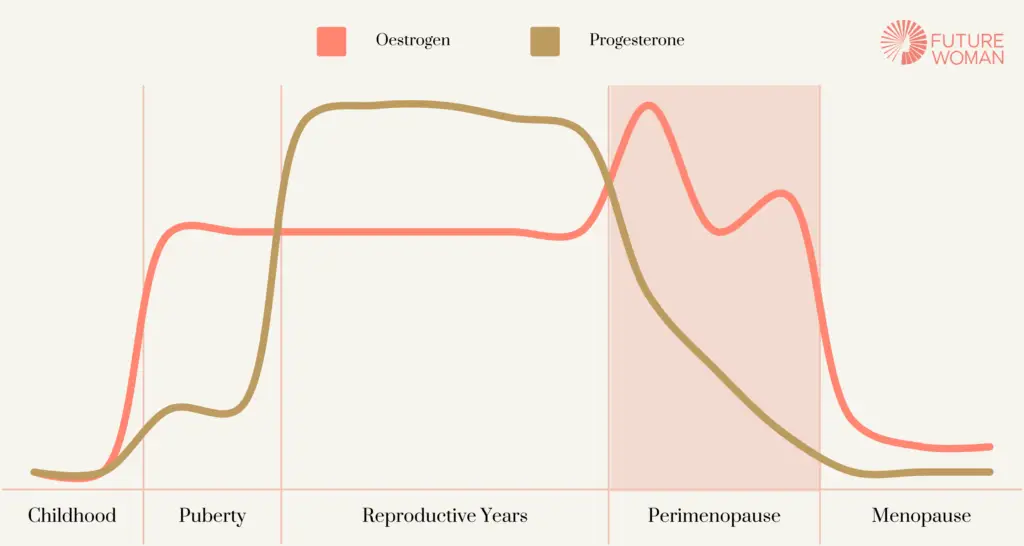
Around 34 per cent of women report breast tenderness in early perimenopause, and it often eases as you move into the later stages and into menopause. The driver is usually the same: high, fluctuating oestrogen and dropping progesterone.
Quick Takeaways
- Breast tenderness usually points to high oestrogen and low progesterone, not low oestrogen
- Around 34 per cent of women experience it during early perimenopause
- Stress, poor oestrogen clearance and inflammation can make it worse
- Two women with the same oestrogen levels can have very different symptoms due to differences in oestrogen metabolism
- Testing shows which of these is driving yours, and your 12 week plan tells you what to do about it
What causes breast tenderness in perimenopause?
In the early stages of perimenopause, oestrogen can fluctuate to reach higher levels than at any other time in our reproductive lives. At the same time, progesterone levels drop as ovulation becomes less frequent. This can lead to something we call unopposed oestrogen, or oestrogen dominance. Breast tenderness often appears as a result of this hormonal pattern, when oestrogen is high and there is not enough progesterone to balance it.
Various factors can worsen unopposed oestrogen in early perimenopause. Stress and/or use of hormonal contraceptives like the Mirena IUD can lower progesterone further by suppressing ovulation. Issues with any of the three phases of oestrogen detoxification can influence oestrogen’s effects. And other factors which we test such as gut health, inflammation and nutrient status can all play a role.
This is why testing can be so valuable as it provides information you can act on.
Can anything help my symptoms?
The best support in perimenopause comes from understanding and addressing your individual hormonal picture, including your stage of perimenopause, how well you metabolise oestrogen, your cortisol patterns and other factors like inflammation and nutrient status.
A combination of targeted supplement, diet and lifestyle recommendations, potentially alongside bio identical hormones, leads to the best results for our clients.
Testing and a personalised, 12 week plan
Our Advanced Hormone Test for perimenopause measures oestrogen, progesterone, testosterone and cortisol, along with the metabolites that show which detoxification pathway your body favours.
Your results come back with a personalised 12 week health plan built by one of our expert nutritionists. Supplements, diet and lifestyle changes, all chosen for your results rather than a general perimenopause template.
Not sure which of your symptoms are hormonal? Our symptom checker takes a few minutes and points you toward the likely imbalance.
FUTURE WOMAN’s Bioidentical Hormone Clinic
When breast tenderness comes from low progesterone, replacing that progesterone is the most direct fix. Conventional HRT approaches typically prioritise progestins, which are synthetic molecules that behave differently in the body. Bioidentical hormone therapy uses a molecule identical to the progesterone you make yourself, prescribed at a dose set for your results.
Our bHRT clinic is led by our Medical Director and starts with an initial consultation and your test results. This is the route for you if lifestyle changes have not been enough, or if you want prescription support alongside your plan.
Emily’s story
Emily was 43 and had started to notice new symptoms of breast tenderness, worsening PMS and heavier periods, which seemed to be getting worse with every cycle. On testing with the Advanced Hormone Test, her oestrogen came back within a healthy range but her Phase 1 oestrogen metabolism results revealed a preference for the more proliferative 16-OH pathway. Her progesterone was also low, because the Mirena coil she was using was suppressing her own progesterone production.
Emily’s 12 week plan focused on targeted oestrogen metabolism support and we recommended she follow up with our bHRT clinic where she discussed adding body identical progesterone alongside her Mirena IUD.
Testing was the key first step to identify the underlying drivers of her symptoms.
Where to start
Breast tenderness in perimenopause is a useful signal that something needs investigating. Testing tells you whether you are dealing with high oestrogen, low progesterone, poor clearance or all three.
Start with the Advanced Hormone Test and your 12 week plan, or book into the Bioidentical Hormone Clinic if you want prescription support.
Still working out which symptoms are hormonal? Check out our free symptom checker first.
References
Sivarajah R, Welkie J, Mack J, Casas RS, Paulishak M, Chetlen AL. A Review of Breast Pain: Causes, Imaging Recommendations, and Treatment. Journal of Breast Imaging. 2020;2(2):101-11.
Prior JC. Progesterone for Symptomatic Perimenopause Treatment. Facts, Views & Vision in ObGyn. 2011;3(2):109-20.