

Many women notice they suddenly feel more ‘allergic’ during their forties. Foods that were once well tolerated suddenly trigger headaches, a glass of wine causes facial flushing or skin becomes more reactive and prone to itching. Others find themselves dealing with increased anxiety, nasal congestion or allergy type symptoms seemingly out of nowhere.
It’s common for women to visit their GP about well known symptoms linked to perimenopause including heavy or irregular periods, brain fog, low libido and weight gain, but they rarely realise that their allergy symptoms are also connected, sometimes spending money on food intolerance tests which reveal no answers. The important factor that is regularly missed: histamine.
At FUTURE WOMAN, we observe this pattern frequently. In fact, three out of four women over 40 who have completed hormone testing with us report allergy-type symptoms commonly associated with histamine activity, including itchy or watery eyes, sneezing, hay fever, eczema and hives. Whilst these symptoms are often considered unrelated to hormonal health, growing evidence suggests there may be a significant connection between female hormones and histamine regulation. Hormone testing in perimenopause can be a useful way to understand the underlying hormonal drivers of histamine-related symptoms.
Understanding this relationship may help explain why some women experience new sensitivities and inflammatory symptoms during the menopausal transition.
Quick Takeaways
- Oestrogen stimulates mast cells to release histamine and can reduce the enzyme that breaks it down.
- Progesterone stabilises mast cells, so its decline in perimenopause leaves you more reactive.
- Symptoms range from flushing and hives to migraines, gut trouble and anxiety.
- Some of the healthy foods women turn to in perimenopause are naturally high in histamine.
- The right hormone test tells you whether unopposed oestrogen or poor oestrogen clearance is driving the response.
What is Histamine?
Histamine is a naturally occurring chemical messenger involved in numerous physiological processes throughout the body. It plays an important role in immune defence, inflammatory responses, digestive function and nervous system signalling.
Histamine is stored primarily within specialised immune cells known as mast cells. When the body encounters a trigger such as an allergen, infection or tissue injury, mast cells release histamine as part of the body’s natural protective response.
Under normal circumstances, histamine performs many beneficial functions. However, excessive histamine release or impaired histamine breakdown can result in a wide range of symptoms, including:
- Flushing
- Headaches and migraines
- Nasal congestion
- Itchy skin
- Hives
- Digestive symptoms
- Heart palpitations
- Anxiety
- Dizziness
- Sleep disturbances
Because histamine receptors are found throughout the body, symptoms can vary significantly between individuals and often appear unrelated at first glance. This build-up pattern, described in the Maintz and Novak review of histamine intolerance, is often referred to as histamine intolerance.
Can perimenopause cause histamine intolerance?
Perimenopause is characterised by significant hormonal fluctuation. Rather than a gradual decline in hormones, oestrogen levels often rise and fall unpredictably whilst progesterone levels gradually decrease. These hormonal shifts can directly influence histamine activity.
Oestrogen and Histamine: A Bidirectional Relationship
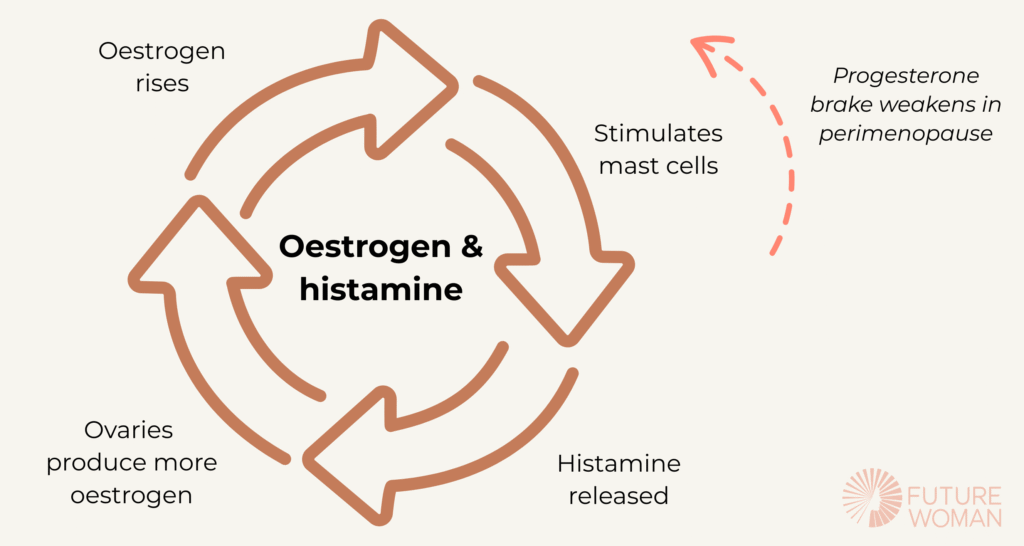
Research suggests that oestrogen can stimulate mast cells to release histamine. As oestrogen levels increase, histamine activity may also increase.
Interestingly, the relationship works in both directions. Histamine can stimulate the ovaries to produce more oestrogen, creating a feedback loop in which elevated oestrogen promotes histamine release and increased histamine further stimulates oestrogen production.
Oestrogen may also reduce the activity of diamine oxidase, commonly known as DAO, one of the body’s primary enzymes responsible for breaking down histamine. Reduced DAO activity may allow histamine to accumulate more readily.
This interaction may help explain why some women experience worsening symptoms around ovulation or during periods of significant hormonal fluctuation.
The Protective Role of Progesterone
Progesterone appears to exert a stabilising effect on mast cells and may help reduce histamine release. As progesterone levels decline during perimenopause, this protective influence may diminish, potentially increasing sensitivity to histamine and inflammatory triggers. The combination of fluctuating oestrogen and declining progesterone can create an environment in which histamine related symptoms become more noticeable.
(Read more about the stages of perimenopause here)
A Note on Mast Cell Activation Syndrome
For some women, symptoms extend beyond histamine intolerance into mast cell activation syndrome (MCAS), a condition in which mast cells release their contents inappropriately across multiple body systems. A 2018 paper in Allergy, Asthma and Immunology Research highlighted perimenopause as a period when MCAS symptoms often appear or worsen. If reactions feel severe, involve breathing changes or drops in blood pressure, or there is a family history of mast cell disease, a referral to an allergist or immunologist may be helpful alongside hormonal support.
What are the signs of histamine intolerance in perimenopause?
During the early stages of perimenopause, many women experience periods of relatively high or fluctuating oestrogen alongside declining progesterone. This hormonal pattern is often referred to as oestrogen dominance.
Histamine may contribute to many of the symptoms associated with this phase, including:
- Heavy menstrual bleeding
- Breast tenderness
- Premenstrual syndrome
- Menstrual migraines
- Mood changes
- Irritability
- Anxiety
Histamine influences both inflammation and blood vessel function, which are thought to play a role in migraine development. Some research also suggests that mast cell activity may contribute to inflammatory processes associated with heavy or painful periods.
Whilst histamine is unlikely to be the sole driver of these symptoms, it may represent an important piece of the wider hormonal picture.
How does gut health affect histamine?
The gastrointestinal tract plays a central role in histamine regulation.
The gut contains large numbers of immune cells and mast cells and is responsible for producing DAO, the primary enzyme involved in histamine breakdown.
Several factors can impair histamine metabolism, including:
- Gut inflammation
- Alterations in the gut microbiome
- Chronic stress
- Digestive disorders
- Certain medications
Some gut bacteria are also capable of producing histamine themselves, potentially increasing the body’s overall histamine burden.
Women experiencing symptoms such as bloating, reflux, nausea or altered bowel habits alongside allergy type symptoms may benefit from considering the role of gut health in their overall symptom picture.
What foods and lifestyle factors trigger histamine intolerance?
Many women become increasingly focused on supporting their health during perimenopause and often introduce foods widely recognised for their nutritional benefits.
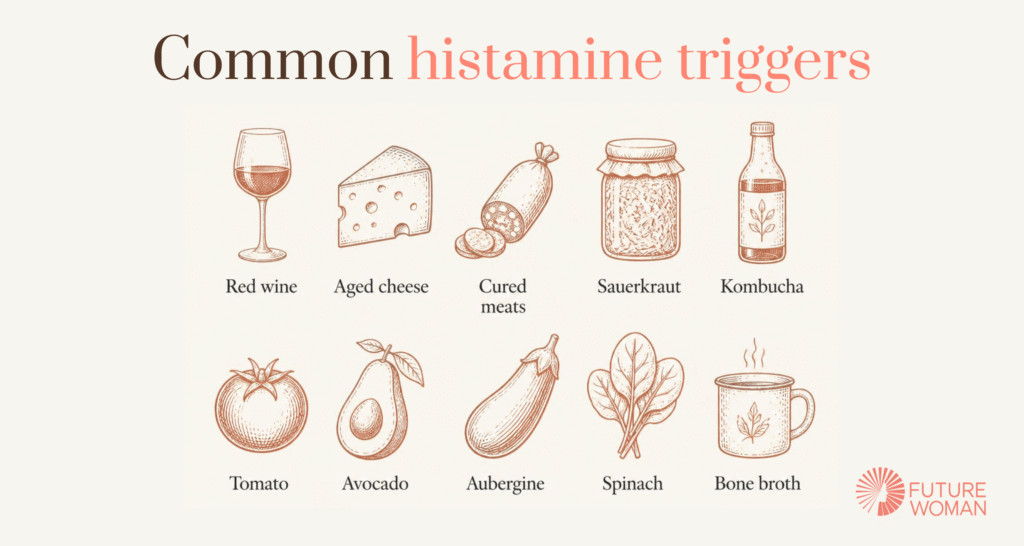
Foods such as avocados, tomatoes, spinach, bone broth and certain protein powders are frequently recommended as part of a healthy diet. However, some of these foods are naturally high in histamine or may stimulate histamine release in susceptible individuals. For women already experiencing histamine sensitivity, these otherwise nutritious foods may inadvertently contribute to symptoms.
Similarly, many women increase their use of skincare and beauty products during midlife as they begin to notice changes in their skin. Some products may contain compounds known as xenoestrogens, environmental chemicals that can mimic the effects of oestrogen within the body. Emerging research suggests that certain xenoestrogens may influence mast cell activity and potentially contribute to inflammatory and allergic responses in susceptible individuals.
Whilst skincare products are unlikely to be the sole cause of symptoms, they may represent one factor worth considering as part of a broader assessment of hormonal and immune health.
If you are unsure which of your symptoms may be linked to hormones, our free symptom checker offers a quick way to identify likely root causes.
Why Symptoms Can Feel So Unpredictable
One of the defining features of both perimenopause and histamine sensitivity is unpredictability. A woman may feel perfectly well one day and experience headaches, flushing, itching or anxiety the next.
Histamine levels can be influenced by a variety of factors, including:
- Hormonal fluctuations
- Stress
- Sleep deprivation
- Alcohol
- Infections
- Medications
- Temperature changes
- Dietary choices
When several of these factors occur simultaneously, the body’s ability to regulate histamine may become overwhelmed, resulting in symptom flare ups. Understanding these influences can help women identify patterns and better manage potential triggers.
How FUTURE WOMAN Can Help
There is no single solution for histamine related symptoms. Instead, successful management often requires a personalised approach that addresses hormonal health, stress resilience, gut function and lifestyle factors.
Comprehensive Hormone Testing
Hormonal fluctuations are often a key component of the histamine puzzle. Our Advanced Hormone Test, (the DUTCH test), provides detailed insight into:
- Oestrogen levels
- Oestrogen metabolism
- Progesterone levels
- Cortisol patterns
- Stress responses
- Methylation and detoxification pathways.
Our testing results provide valuable insights into physiological factors, hormonal imbalances, and potential unopposed oestrogen that might be driving histamine-related symptoms. Each test includes a 12 week personalised health plan with tailored diet, lifestyle, and supplement advice specifically designed for your unique symptoms and data. To assist with the complex role of histamine during perimenopause, our expert practitioners offer bespoke support and guidance. Key areas of focus in our recommendations may involve:
- Supporting Blood Sugar Balance. Fluctuations in blood sugar can trigger stress hormone release and contribute to inflammation. Balanced meals containing adequate protein, fibre and healthy fats can help support greater stability.
- Identifying Histamine Triggers. A temporary, structured low histamine approach may help identify individual triggers without creating unnecessary long term dietary restrictions.
- Improving Sleep and Stress Resilience. Mast cells are highly responsive to stress hormones. Prioritising restorative sleep, regular movement, mindfulness practices and relaxation techniques may help support nervous system balance.
- Supporting Gut Health. Addressing digestive symptoms and supporting a healthy microbiome can play an important role in improving histamine tolerance and reducing inflammation.
Our practitioners can also provide on-going hormone health consultations to support you on your health journey. If you would like a starting point before booking a test, the symptom checker can help clarify which areas to focus on.
A More Connected View of Perimenopause
Perimenopause affects far more than reproductive hormones alone. It influences the immune system, nervous system, digestive system and inflammatory pathways in complex and interconnected ways.
For some women, the sudden appearance of food sensitivities, skin reactions, headaches, anxiety or digestive symptoms may not represent entirely new conditions. Instead, they may reflect the changing relationship between hormones, histamine and the body’s broader physiological systems.
Research into the relationship between histamine and female hormones continues to evolve. Whilst there is still much to learn, increasing awareness of this connection is helping more women understand symptoms that may previously have felt confusing or unrelated.
Most importantly, recognising these patterns allows women to approach perimenopause with greater understanding and confidence, whilst identifying practical strategies to support their health and wellbeing during this important life stage.
References
Almansa, C., & Jiménez, J. L. (2021). Oestrogen and histamine interaction in reproductive-aged women: Implications for symptoms during the menstrual cycle and menopause. Clinical Reviews in Allergy & Immunology, 60(3), 409–422. https://doi.org/10.1007/s12016-020-08802-6
Griffith, C. E., & Francois, G. A. (2022). Progesterone as an immunomodulator: Clinical implications for mast cell stabilisation in perimenopause. Immunology Letters, 243, 1–9. https://doi.org/10.1016/j.imlet.2021.07.015
Kim, M., Park, H., & Kim, J. (2018). Mast cell activation syndrome and its clinical presentation during perimenopause: Focus on immunological implications. Allergy, Asthma & Immunology Research, 10(2), 134–144. https://doi.org/10.4168/aair.2018.10.2.134
Maintz, L., & Novak, N. (2007). Histamine and histamine intolerance. American Journal of Clinical Nutrition, 85(5), 1185–1196. https://doi.org/10.1093/ajcn/85.5.1185
Narita, S., Goldblum, R., Watson, C., Brooks, E., Estes, D., Curran, E., & Midoro-Horiuti, T. (2006). Environmental Estrogens Induce Mast Cell Degranulation and Enhance IgE-Mediated Release of Allergic Mediators. Environmental Health Perspectives, 115, 48 – 52. https://doi.org/10.1289/ehp.9378
Schindler, A. E., & Campagnoli, C. (2019). The effect of perimenopausal hormone fluctuations on mast cell activation and histamine release. Maturitas, 126, 1–7. https://doi.org/10.1016/j.maturitas.2019.07.006
Sethuraman, G., Rao, T. V., & Hegde, N. (2020). The influence of gut microbiota on the metabolism of histamine and implications for histamine intolerance in perimenopausal women. Gut Microbes, 11(6), 1537–1550. https://doi.org/10.1080/19490976.2020.1773806
Vasiadi, M., Kempuraj, D., Boucher, W., Kalogeromitros, D., Theoharides, T. C., & Theoharides, T. C. (2006). Progesterone Inhibits Mast Cell Secretion. International Journal of Immunopathology and Pharmacology, 19, 787 – 794. https://doi.org/10.1177/039463200601900408


