At FUTURE WOMAN, we believe organ meats are one of the most overlooked tools for hormone health and nutrient density. Also known as ‘offal’, organ meats include heart, liver, kidney, pancreas, spleen, tongue and brain.
Organ meats are making a comeback. We now realise they are a superfood for nutrient repletion, especially in modern diets low in micronutrients. Even small amounts (1 to 2 servings a week) can be hugely beneficial.
Quick takeaways
- Organ meats are far more nutrient dense than muscle meat, especially in vitamin A, B vitamins, iron, zinc and choline.
- Liver’s nutrients are highly bioavailable, so your body absorbs and uses far more of them than the same nutrients from a supplement.
- Organ meats support hormone health at every life stage, from fertility through pregnancy, postpartum and perimenopause.
- Liver is the only organ meat with a specific pregnancy caution (vitamin A). All others are safe and recommended.
- Not sure which of your symptoms might be hormonal? The symptom checker is a good place to start.
The nutritional benefits of organ meats
When it comes to nutrition, nothing beats organ meats. Studies have shown that they are the most nutrient-dense foods we can eat. Interestingly, organ meats are much higher in nutrients than muscle meats. In some traditional cultures, only the organ meats were consumed. In his book Nutrition and Physical Degeneration, Weston A. Price noted that indigenous North Americans of the Canadian Rockies ate the organ meats themselves and gave the muscle meat to the dogs.
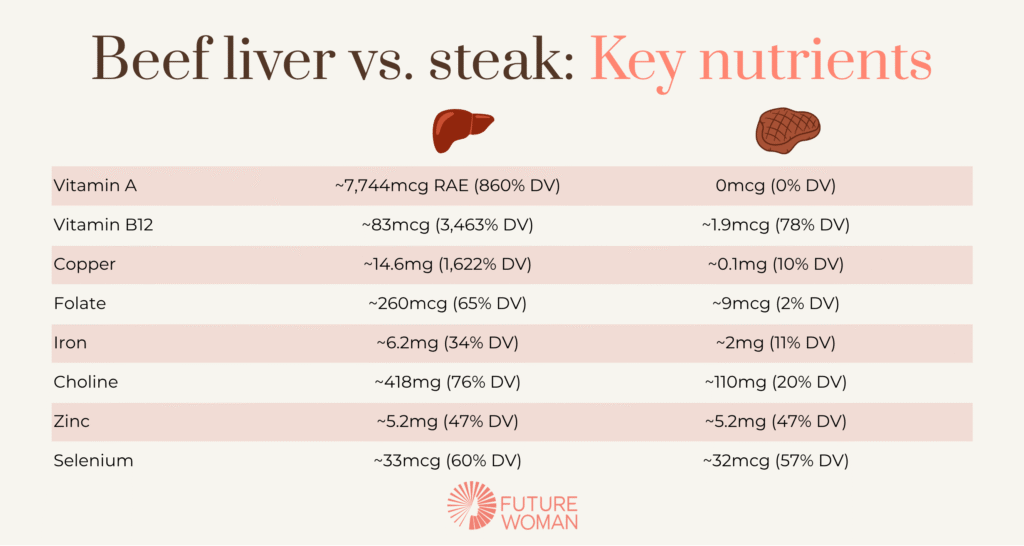
For us, liver is at the top of the list because it contains such a variety of vitamins and minerals, including vitamin E, B1, B3, B6, biotin, folate, B12, copper, heme iron and zinc. It is one of the highest sources of bioavailable retinol (the active form of vitamin A), which we can only get from animal foods. This is so important for women’s health because some of us are poor converters of beta-carotene to retinol, so we really need to be consuming preformed retinol too. It’s essential for immune and reproductive health and more.
These nutrients play a vital role in energy metabolism, DNA synthesis and hormone and neurotransmitter synthesis and function.
But it’s not just the nutrient content of organ meats. Their nutrients are also highly bioavailable, which means we absorb a high proportion of those nutrients (this is the important bit). For example, heme iron, which is only found in animal foods, is more bioavailable than non-heme iron, which is found in plant foods. Liver is one of the best sources of iron and when we take into account our ability to absorb the iron in liver, it’s hard to beat. In fact, if you’re ever feeling tired (and who isn’t), why not try some liver.
So, let’s look a little closer at why we love organ meats.
Incredibly micronutrient dense
- Vitamin A (retinol): Liver (especially beef or chicken) provides 500–1,000%+ of the daily value per 100g.
- B Vitamins: B12: critical for nerve function and red blood cell formation. Heart and kidney deliver 1,000–3,000% DV per serving. Riboflavin (B2), niacin (B3), folate (B9) are abundant in liver and brain.
- Vitamin K2: Found in heart and brain. Supports calcium metabolism and cardiovascular health.
- Iron (heme form): Liver and spleen provide 20–50% DV per ounce, highly absorbable (vs. non-heme plant iron).
- Zinc: Kidney and heart are top sources (30–50% DV per serving).
- Selenium: Liver offers 50–100% DV; supports thyroid and antioxidant defence.
- Copper: Liver is one of the richest sources (up to 1,000% DV); balances zinc intake.
- Vitamin D: Kidney and liver contain modest amounts.
Contains unique nutrients
- Coenzyme Q10 (CoQ10): supports mitochondrial energy and heart health. Heart is the richest dietary source of CoQ10.
- Choline: Brain and liver provide 300–600mg per serving (daily need ~550mg). Choline is such an important yet often overlooked nutrient. It’s vital for brain function, hormone balance and liver/bile health.
- Creatine: Heart and tongue contain natural creatine for muscle energy.
- Taurine: Heart and brain are high in this amino acid, which supports cardiovascular and neurological health.
Protein quality
We’re always banging on about protein at FUTURE WOMAN, including how protein powders fit into hormone health. Protein is essential for hormone balance because it helps to keep us satiated, it helps to keep our blood sugar balanced and keeps insulin low. Protein also provides amino acids that repair and maintain our hormones, muscles, organs, nervous and immune system.
Some women find it difficult to meet their protein requirements from plant protein alone. For example, many women find that as they approach the menopause, they need more protein for building muscle, blood sugar balance and more during this time.
Organ meats have a complete amino acid profile, often higher in glycine and proline than muscle meat, which supports collagen synthesis and gut health.
Potential therapeutic roles
Anaemia: Liver’s iron, B12 and folate combination can be helpful for anaemia. In our health plans, we often suggest women include organ meats in their diet, especially if they have symptoms such as fatigue. Many iron supplements are poorly absorbed and can even cause constipation, whereas organ meats are highly bioavailable.
Cognitive health: Choline and B vitamins in brain and liver may support memory and mood.
Immune support: Zinc, selenium and vitamin A are critical for immune function.
Can I not just take a supplement?
We believe supplements can be incredibly helpful. But organ meats often provide nutrients in a more bioavailable, synergistic and complete form than isolated supplements. It comes down to quality, but whole-food organ meats can have a better absorption rate and contain cofactors in the ideal ratios.
- Cofactors: Liver contains vitamin A, copper and B2, all needed to utilise each nutrient.
- Natural ratios: Zinc to copper in liver is close to the ideal 8:1, which helps prevent imbalance. Supplements can contain ratios of 10:1 or worse, which depletes copper.
- No fillers or anti-nutrients: Supplements can contain magnesium stearate, titanium dioxide and other additives. Organ meats are 100% bioavailable food.
Who would benefit from including organ meats in their diet?
We believe everyone should include organ meats in their diet. They really are nature’s multivitamins. However, when it comes to women especially, the nutrients in organ meats are incredibly beneficial to hormone health, healthy menstrual cycles and egg quality.
Women can be particularly susceptible to nutritional deficiencies such as iron because of the blood we lose during our period (and the heavier the period, the more iron we lose). Organ meats can be helpful when preparing for pregnancy because of their choline, vitamin A and folate levels, all incredibly important nutrients for a healthy pregnancy and for egg quality. After birth, our nutrient needs shift again (see our guide to postpartum symptoms), especially if we’re breastfeeding, and so organ meats can be helpful during this stage. We especially need to replenish our iron stores due to the high blood loss after birth.
Should I eat organ meats when I’m pregnant?
Liver is actually the only organ meat with a specific pregnancy caution (vitamin A). All others (heart, kidney, tongue, spleen, etc.) are safe and in fact highly recommended during pregnancy.
Research comparing liver to vitamin A supplements found the two are not necessarily equivalent in teratogenic potential, because of differences in how the body processes certain vitamin A metabolites (Buss et al., 1994, Human & Experimental Toxicology). Reviews of periconceptional vitamin A use suggest that daily intakes of preformed vitamin A above 10,000 IU are where risk starts to be reported, which is why moderation with liver specifically matters (Miller et al., 1998, Reproductive Toxicology; NIH Office of Dietary Supplements, Vitamin A fact sheet).
Key pregnancy benefits of organ meats
- Iron: Pregnancy increases need by 50%. Liver, heart and kidney provide heme iron (15–30% absorption vs. 2–10% from plants).
- Folate: Liver contains natural folate (not synthetic folic acid), which is critical for neural tube formation.
- Choline: 450 mg/day needed (liver/brain = 400–600 mg per serving), essential for foetal brain development.
- B12: Prevents megaloblastic anaemia; deficiency linked to preterm birth.
Safety rules for pregnant women
- Source matters: choose grass-fed or pasture-raised liver where possible (lower toxins, higher omega-3s). Avoid liver from unknown or factory-farmed sources.
- Limit liver to 30–60g weekly, to keep preformed vitamin A intake within the range supported by the research above.
- No raw or undercooked liver, including pâté from unknown sources.
How to eat organ meats?
We know that organ meats can take some getting used to. The easiest to incorporate into your diet is probably liver, for example in chicken liver pate. Heart is also a good one to start with. You can add these to mince-based dishes like shepherd’s pie or chilli con carne, a great way to get liver into your unsuspecting kids.
How to make liver more appetising
- Soak liver for a few hours or overnight in milk before cooking to improve the flavour. Consider starting with chicken liver, which has a milder flavour. We love our chicken liver pate recipe.
- Don’t overcook it! Liver can get tough and rubbery and taste more iron-y if it’s overcooked.
- You can also hide liver in dishes. We find it easiest to do this in mince dishes such as Bolognese. This is a great way to get liver into your kids.
But isn’t the liver where toxins are stored?
When it comes to animal foods, quality is important. It’s best to choose organic, grass-fed meat that comes from animals that have not been factory farmed and have eaten a natural diet. (Of course, this isn’t always possible, and conventional meat can still be a great source of nutrients.)
Animals (including humans) do concentrate certain toxins in the liver, but this is not a reason to avoid organ meats when sourced properly. Some of that toxin load comes from environmental toxins that also affect your own hormone health, which is exactly why sourcing matters. The liver is the body’s primary detoxification organ, so it processes and neutralizes toxins rather than ‘storing’ them like fat does.
Many people believe the liver acts like a sponge, soaking up toxins and holding onto them, but that’s a myth. In reality, the liver is more like a busy factory. Toxins enter, get processed and broken down, then are safely sent out of the body. Picture a kitchen water filter. It traps contaminants to clean the water, but the filter itself doesn’t stay dirty as long as it’s functioning well, just like a healthy liver in a properly raised animal.
So, yes, the liver processes toxins but does not hoard them like fat does. Just try to buy properly sourced liver (grass-fed, organic).
Where to start
Organ meats are nature’s superfoods. They contain incredible amounts of nutrients, many of which are missing from our modern diet yet are so critical for women’s health. Compared to supplements, these whole foods are more bioavailable and contain nutrients in the ideal ratios.
We believe all women can benefit from including organ meats in their diet, whether you’re looking to improve your fertility, pregnant (see our safety guidelines above), postpartum, breastfeeding or peri/menopausal. If you want to understand your own hormone picture before making any dietary changes, start with the Advanced Hormone Test which includes a 12 week plan with diet, lifestyle and supplement recommendations.
Organ meats for the win!
References
- Buss, N.E., Tembe, E.A., Prendergast, B.D., Renwick, A.G. and George, C.F., 1994. The teratogenic metabolites of vitamin A in women following supplements and liver. Human & Experimental Toxicology, 13(1), pp.33-43.
- Miller, R.K., Hendrickx, A.G., Mills, J.L., Hummler, H. and Wiegand, U.W., 1998. Periconceptional vitamin A use: how much is teratogenic? Reproductive Toxicology, 12(1), pp.75-88.
- National Institutes of Health, Office of Dietary Supplements, 2016. Vitamin A — Health Professional Fact Sheet.