

When I first tested my hormones a few years ago to uncover what was going on with my painful periods, I assumed there was just one way to do it and that it would give me all the answers I needed. I quickly learned that hormone testing is far more nuanced than that.
These are the crucial things I wish I had known before I started.
Timing really matters for hormone testing
As cycling women, our reproductive hormones fluctuate, which means you will get different results depending on where you are in your menstrual cycle when you test.
Most hormone tests, including those carried out by your GP, are done on day three of the menstrual cycle. This helps standardise results and reduce variation, especially since cycle length and ovulation timing can differ so widely from woman to woman.
However day three, when your hormones are at their lowest levels, doesn’t offer particularly useful insights when it comes to understanding what is driving your symptoms.
The mid luteal phase, roughly a week after ovulation, is a far more revealing time to test. At this point you can see clearly whether ovulation has actually occurred, whether progesterone is being produced in sufficient amounts, and whether estrogen and progesterone are in balance.
This is important because ovulation is the real star of the menstrual cycle. It is not only important for fertility, it is a vital sign of your overall health as a woman.
When I tested at the GP on day three, everything came back within the normal range. But when I tested again in the luteal phase, I could see I was not producing enough progesterone, which was a big driver of my symptoms.
Learn more about how to identify your testing day.
Blood tests aren’t great for testing hormones
I was really surprised by this. I always assumed blood tests were the only way to do it. In reality, they come with some serious limitations for checking hormones and there are better alternatives available.
One of the main drawbacks is that blood testing only gives you a snapshot of what your hormones are doing at a single moment in time. Our hormones are not released in a steady stream. They are secreted in pulses. Progesterone, in particular, can fluctuate significantly over a 24 hour period. So choosing a testing method that allows for multiple samples across the day is important so you can take an average reading. This is possible with urine and saliva testing, but it’s just not realistic with blood.

The second drawback is specific to fingerprick blood testing done at home. Aside from being uncomfortable, the failure rate is high often leading to retests. Many women struggle to produce enough blood, especially those with an underactive thyroid, or accidentally damage the sample by squeezing too hard. The British Medical Journal has also highlighted that this method can be particularly “unreliable” for estradiol, the key estrogen of our reproductive years.
By contrast, FUTURE WOMAN’s Advanced Hormone Test uses urine and saliva testing which can be done easily at home, without pain, and with a failure rate that is close to zero.
Your adrenal (stress) hormones matter too
When we think of testing hormones we immediately think of estrogen, testosterone and maybe progesterone. But our adrenal hormones like cortisol play such a vital role in how we feel and can be a big driver of hormone issues.
At a basic level, our female bodies are constantly weighing up whether the body needs to prioritise survival or reproduction. High cortisol from acute stress, or low cortisol from prolonged stress, both have a downstream effect on our reproductive hormones leading to irregular cycles, PMS and a host of other symptoms.
When I first tested, my cortisol was on the floor after years of pushing my body too hard. This. in turn, was putting pressure on my progesterone levels and leading to issues with inflammation as well.
Finding a test that includes both reproductive and adrenal hormones is key to understanding the full picture. As our lead nutritionist Francesca Lyon recently told me, “It’s extremely rare that someone comes to us at FUTURE WOMAN with hormonal symptoms and they don’t also have an issue with cortisol.”
Hormone metabolism can affect symptoms more than hormone levels
You have probably never heard of hormone metabolism. I certainly hadn’t.
We tend to focus on how much of a hormone we produce. But how efficiently our body breaks down and eliminates those hormones can be just as important. In some cases, it is more important.
This is especially true for estrogen. If your estrogen metabolism is impaired, you can experience all the classic signs of estrogen dominance even when your actual estrogen levels appear normal when testing. That was exactly my experience. I had heavy periods, severe PMS, cramps and breakouts, yet my estrogen consistently came back on the low end of the reference range.
What urine testing revealed instead was an issue with how I was processing that estrogen. I had slow Phase 2 methylation and a bias towards a more proliferative pathway in Phase 1, particularly the 16-OH pathway. Together, those two patterns explained my symptoms far better than my estrogen levels alone.
Testosterone metabolism is also useful to test, especially for women with PCOS. A metabolite of testosterone called 5 alpha DHT is around three times more potent than testosterone itself. This means you can have normal testosterone levels but still experience symptoms like irregular cycles, excess hair growth and weight gain if this metabolite is elevated.
These hormone metabolites can only be measured through urine testing. This is another reason why relying on blood tests alone often leaves important gaps in the picture.

You should be clear on what you want to get out of hormone testing
When I first decided to test I was taking a slightly random concoction of supplements I’d accumulated over the years. I couldn’t decide if it was a good idea to come off some or all of them before testing or not.
What I’ve since learned is that you need to be clear on what you are trying to uncover.
If your goal is to understand your baseline and see what your hormones are doing without interference, then coming off supplements for around two weeks beforehand makes sense. If, on the other hand, you want to assess whether your current routine is actually helping, then you should stay on them.
This is something many women struggle with, especially if they have tried multiple protocols over the years without real clarity. As one of our clients, Jenny, put it:
“I have been on so many supplements over the years that I lost track of what I was taking and why. After speaking to the team at FUTURE WOMAN, I decided to come off everything a few weeks before testing. They then recommended a really targeted supplement plan based on my symptoms and results. Now my supplement routine is so much more streamlined and I know what each supplement is doing.”
If you’re on HRT, it’s a different story and you shouldn’t stop your hormone therapy before testing. As Dr Ruqia Zafar explains, “Testing while on HRT provides so much useful information, allowing us as practitioners to assess whether you are on the right type and dose of hormones, and whether a different combination might suit you better.”
You should start tracking your hormones earlier than you think
Many women are surprised to learn that perimenopause can begin in their mid to late thirties. I certainly was!
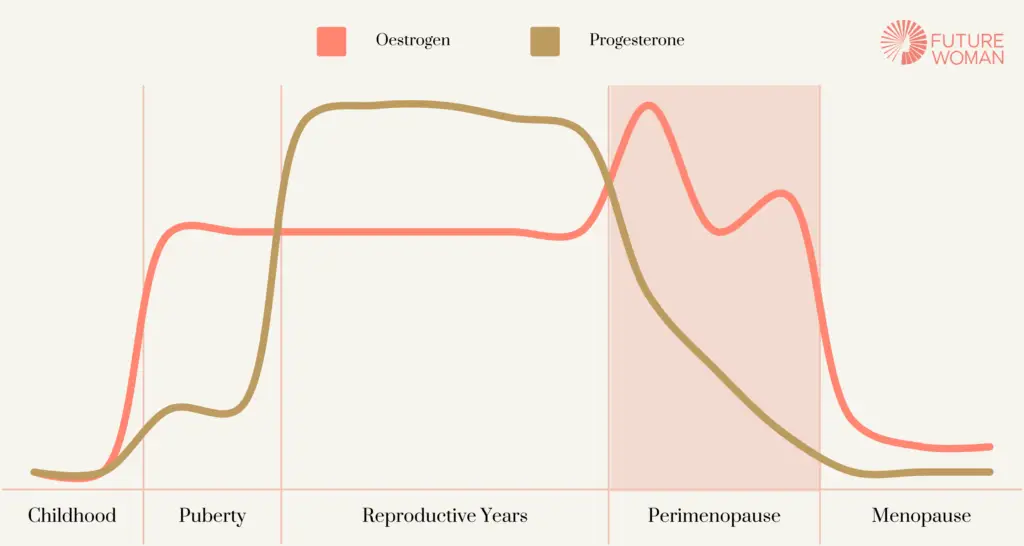
One of the earliest hormonal shifts that can happen from 35 onwards is a gradual loss of progesterone. Your cycles may still be regular, but you might start noticing things like increased anxiety, poorer sleep, worsening PMS or heavier, more painful periods than before.
I am currently 39 and I now check my hormones, particularly progesterone, once a year. Not because I am trying to diagnose myself with anything, but because it helps me understand when these changes begin for me personally. It also means I can look back at my baseline results later if I ever want to explore treatment options like HRT.
I also like to keep an eye on my cortisol levels regularly. Stress has a funny way of creeping up on you without you realising. Sometimes I do not fully appreciate how much pressure I am under until I see it reflected in my results.
Seeing your results will compel you to make changes way more than anything you read or see on Instagram
We all know the basics of what supports better health. More sleep. Fewer ultra processed foods. More movement. But knowing it and actually doing it are very different things!
An unexpected benefit of testing for me was how strongly it compelled me to make positive changes.
One of the biggest shifts I have made since testing is opting for cleaner beauty and household products. I had read plenty of articles about the impact of environmental toxins on hormone health. But when my testing showed elevated oxidative stress, and my practitioner linked this to poor estrogen detoxification and my painful periods, I stopped brushing it off and started taking it seriously. It made a big difference.
We see this shift in our clients all the time. As one of our clients, Laura, told me:
“I always knew coffee didn’t agree with me, but I still drank at least three cups a day! When my test results showed very high cortisol levels, and my nutritionist Claire explained how that might be worsening my perimenopause symptoms, I finally switched to just one decaf in the morning. It’s made such a difference to my sleep, and also my mood and energy but I probably wouldn’t have made the switch if I hadn’t tested.”
When you see your results, interpreted in the context of your symptoms and your life, it is far more powerful than any cute infographic on Instagram.
You can learn more about the Advanced Hormone Test here or book a free drop in session with a FUTURE WOMAN expert.


